



Ph.D. Physics
Nanoelectronic Device Fabrication
Electrical and Optoelectronic Characterization of Nanoelectronic Devices and Thin-films
M.S. Physics
Nanoelectronic Device Fabrication and Characterization

Passionate and dedicated physics instructor with over 10 years of experience teaching physics at the undergraduate level.
Committed to improving student outcomes through evidence-based practices, with a strong track record of measurable student improvement using empirical assessments.
Nanoelectronic Device Fabrication
Electrical and Optoelectronic Characterization of Nanoelectronic Devices and Thin-films
Nanoelectronic Device Fabrication and Characterization
I have over ten years of experience teaching undergraduate physics. My combined experience with asynchronous and synchronous online instruction, as well as in-person courses, has given me first-hand insight into the distinct challenges students face in each learning environment.
I use evidence-based practices to design course materials and implement assessments that measure students’ conceptual understanding of fundamental physics concepts. Results from these assessments consistently demonstrate significant improvements in student learning with an overall average effect size of 1.31.
Click here to learn more about effect size.
I have experience with all duties related to teaching in-person, and asynchronous and synchronous online physics courses, including scheduling, lecture preparation and delivery, development of homework, exams, and solutions, grading, troubleshooting laboratory equipment, and mentoring students through complex subject material.
Asynchronous online
Designed curriculum for both courses
Force Concept Inventory Assessment Effect Size: 1.41
Conceptual Survey of Electricity and Magnetism Assessment Effect Size: 1.58
Asynchronous online
Adopted curriculum
Algebra Concept Inventory Assessment Effect Size: 0.56
Asynchronous online
Designed curriculum
Conceptual Survey of Electricity and Magnetism Assessment Effect Size: 1.92
Asynchronous online
Designed curriculum
Conceptual Survey of Electricity and Magnetism Assessment Effect Size: 1.38
Synchronous online
Adopted curriculum
Held three one-hour virtual lectures weekly
Upper-division undergraduate optics course at the level of Hecht
Topics (selected): electromagnetic waves, propagation of light, geometrical optics, superposition of waves, polarization, interference, diffraction
Synchronous online
Designed Curriculum
Held three one-hour virtual lectures weekly
In-person
Designed Curriculum
Held three one-hour in-person lectures weekly
Upper-division undergraduate electricity and magnetism at the level of Griffiths
Topics (selected): electric fields, work and energy in electrostatics, Laplace’s and Poisson’s equations, electric dipoles, polarization and polarizable materials, electric dipole approximation
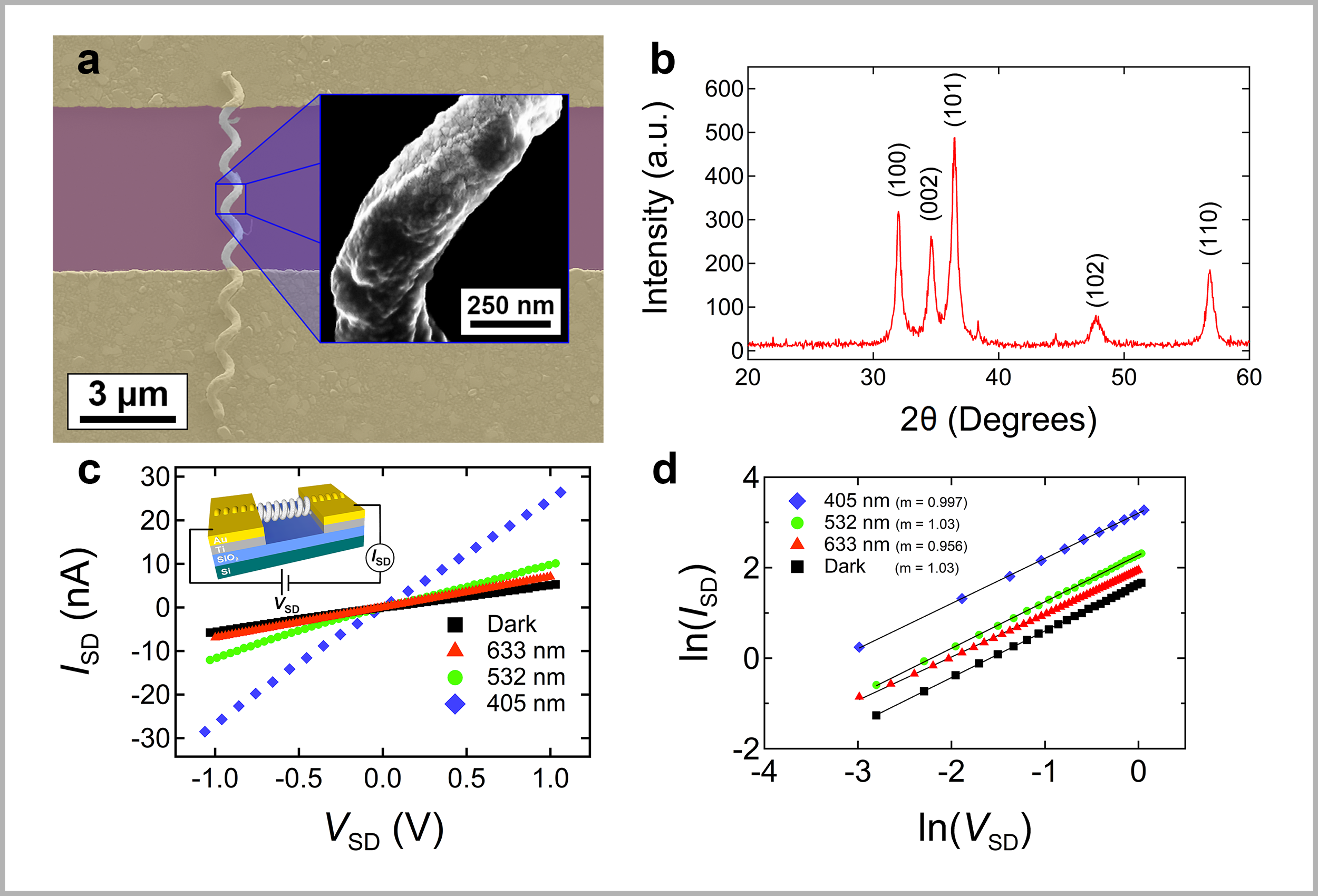
Polycrystalline ZnO was coated onto silica nanocoils using atomic layer deposition and an electronic device consisting of a single ZnO-coated silica nanocoil was fabricated and used to investigate the photocurrent response of the ZnO layer using near-ultraviolet (405 nm) and sub-bandgap (532 and 633 nm) excitation. I was responsible for the the silica nanocoil growth, fabrication of the single ZnO-coated silica nanocoil device, electronic and optoelectronic characterization, acquisition of the scanning electron microscopy images, and the analyses of the data.

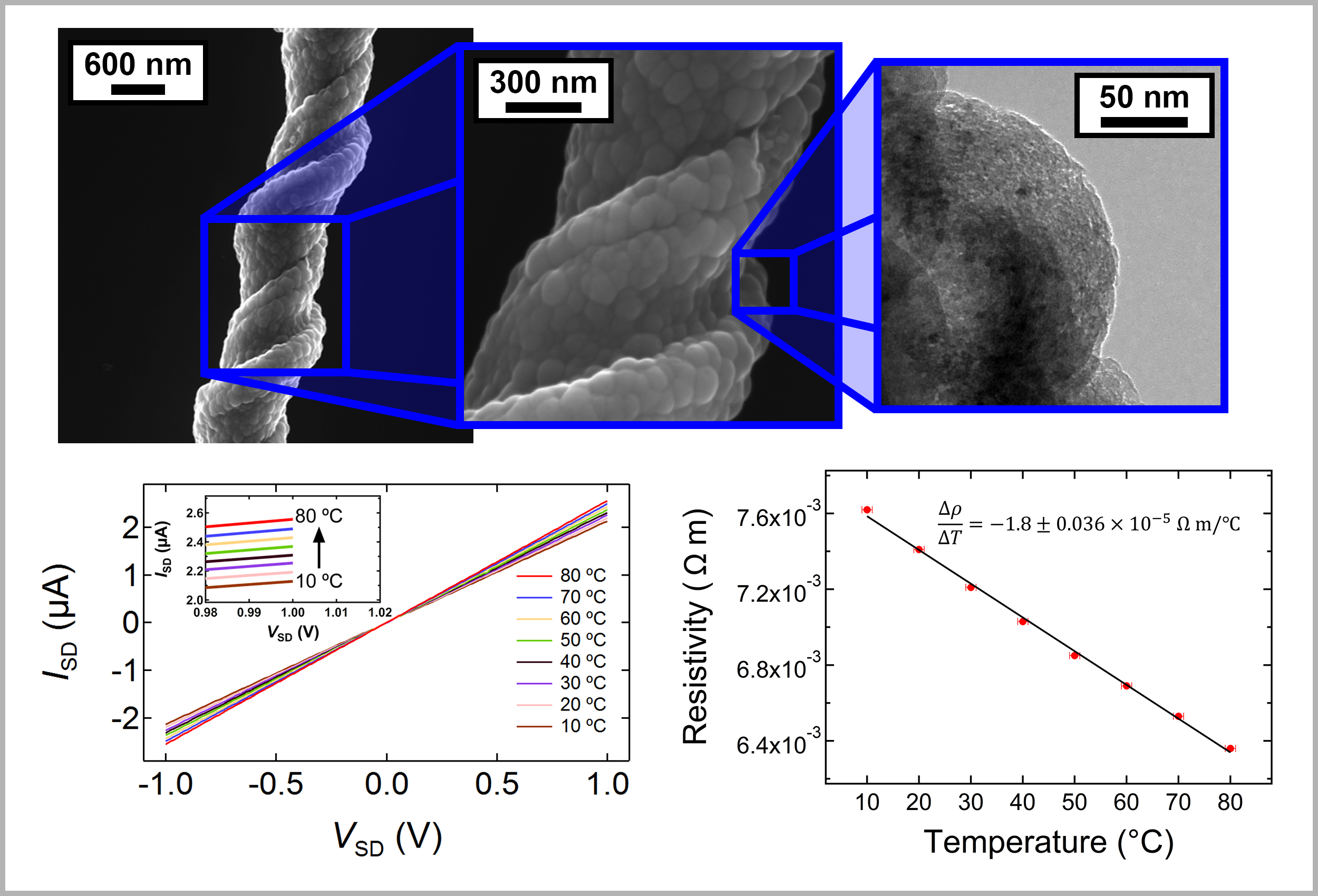
A single GUITAR-coated silica nanocoil electronic device was fabricated and used to characterize GUITAR’s electrical properties. Raman spectroscopic analyses of GUITAR and the measurements of the electrial resistivity and temperature coefficient of resistivity of 11 single GUITAR-coated silica nanocoil electronic devices indicated that GUITAR is a form of nanocrystalline graphite. I was responsible for the silica nanocoil growth, GUITAR deposition, the fabrication of the GUITAR-coated silica nanocoil device, electrical characterization, and the analyses of all electronic and Raman spectroscopic data.

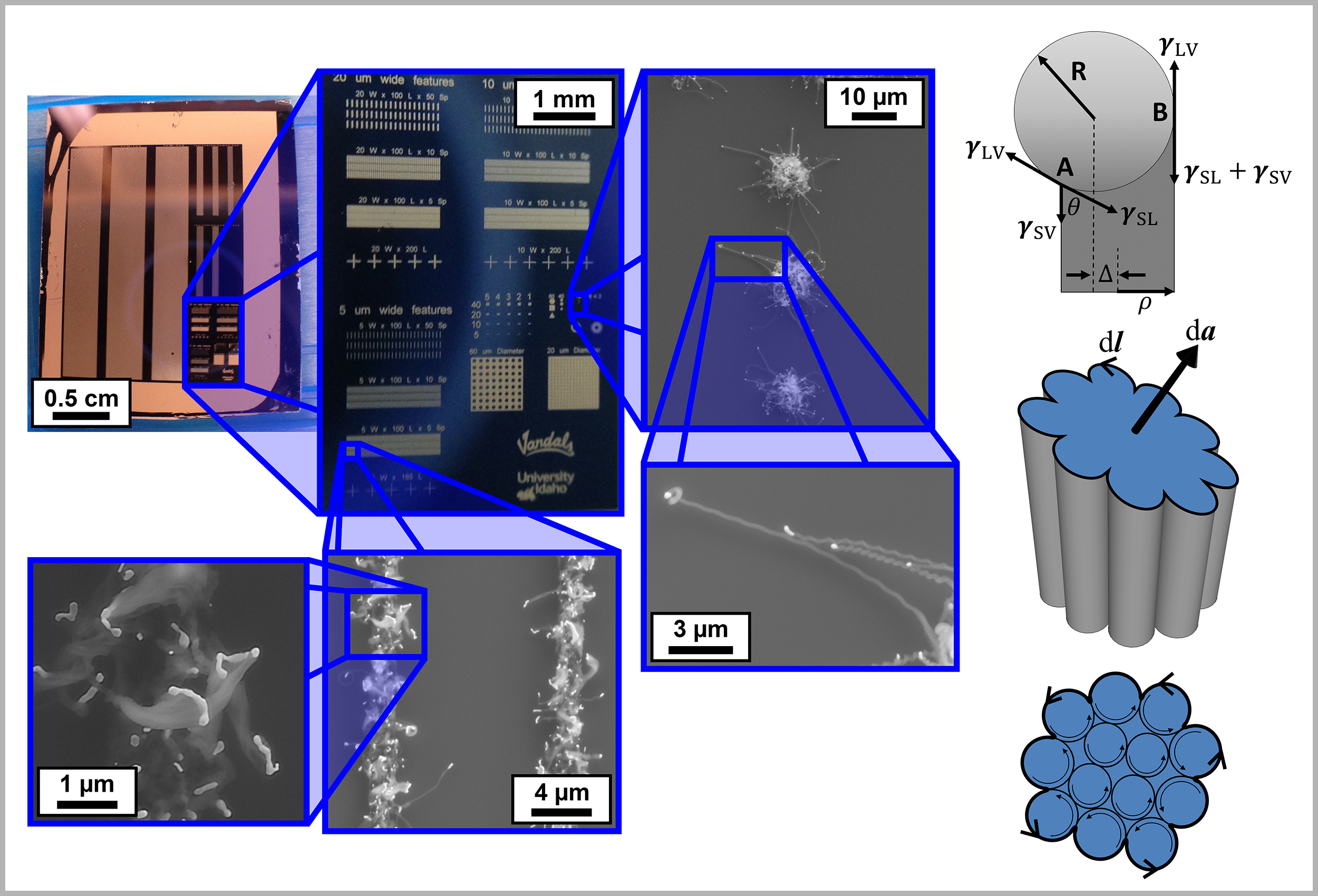
A combination of scanning and transmission electron microscopy was used to characterize the individual stages of silica nanocoil growth to explore and understand the preliminary stages of the growth process and subsequent helical morphology. I performed all experiments, aquired all scanning electron microscopy images, and analyzed the experimental data.

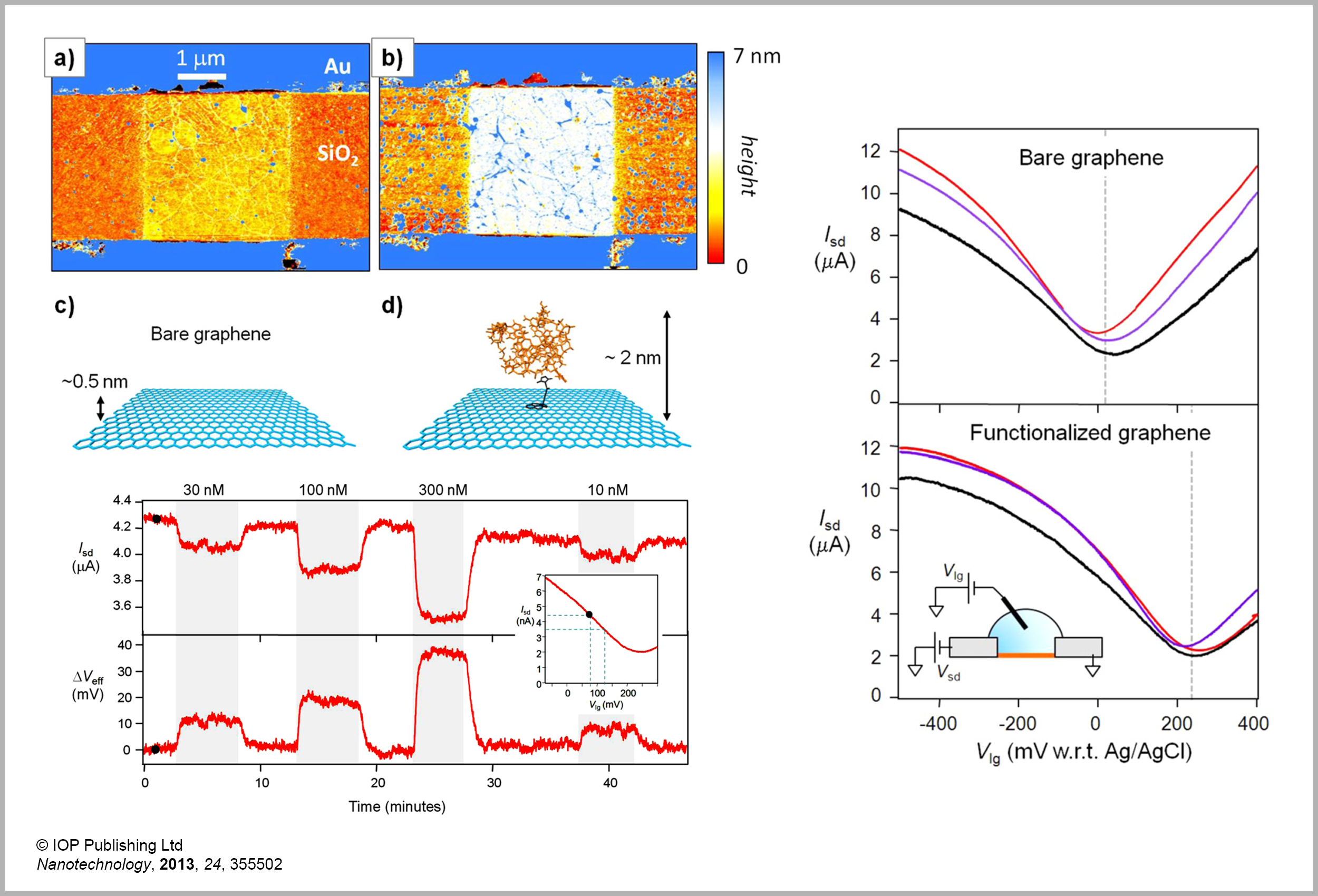
I designed and fabricated a graphene field-effect transistor (GFET) that was utilized as a biological sensor. I used a combination of atomic force microscopy, scanning electron microscopy, and Raman spectroscopy to characterize the surface properties of the graphene sheet and subsequently modified the annealing and device fabrication processes to create a GFET with optimal sensing characteristics.

Peter M Wojcik, Lyndon D Bastatas, Negar Rajabi, Pavel V Bakharev, and David N McIlroy.
Nanotechnology, 2021, 32, 035202.
Peter M Wojcik, Negar Rajabi, Haoyu Zhu, David Estrada, Paul H Davis,
Twinkle Pandhi, I Francis Cheng, and David N McIlroy.
Materials, 2019, 12, 3794.
Negar Rajabi, Peter M Wojcik, Lokendra R Khanal, You Qiang, and David N McIlroy.
Materials Research Express, 2019, 6, 035902.
Peter M Wojcik, Pavel V Bakharev, Giancarlo Corti, and David N McIlroy.
Materials Research Express, 2017, 4, 015004.
Dinesh Thapa, Jesse Huso, Kevin Miklos, Peter M Wojcik, David N McIlroy, John L Morrison, Caleb Corolewski, Matthew D McCluskey, Thomas J Williams, M Grant Norton, Leah Bergman.
Journal of Materials Science: Materials in Electronics, 2017, 28, 25112520.
Isaiah O Gyan, Peter M Wojcik, D Eric Aston, David N McIlroy, I Francis Cheng.
Chem-ElectroChem, 2015, 2, 700706.
Grant Saltzgaber, Peter M Wojcik, Tal Sharf, Matthew R Leyden, Jenna L Wardini, Christopher A Heist, Adeniyi A Adenuga, Vincent T Remcho, and Ethan D Minot.
Nanotechnology, 2013, 24, 355502.
The Professional Science Master’s (PSM) Certificate bridges the gap between academia and the workplace with a curriculum that includes courses in finance, accounting, ethics, communications, and business management.
The interdisciplinary approach to the PSM program provides students with professional training in scientific and business disciplines that are not included in traditional science master’s or doctoral programs.
University of Idaho Department of Physics
Society of Exploration Geophysicists